All-on-4 dental implants replace a full arch of missing teeth using just four strategically angled implants, allowing many patients to leave with secure, non-removable temporary teeth the same day. Because the implants are placed at an angle to maximize existing bone, patients previously told they lacked enough bone for implants often qualify without a bone graft. A CBCT scan confirms candidacy before treatment begins.
What Makes All-on-4 Different From Traditional Implants
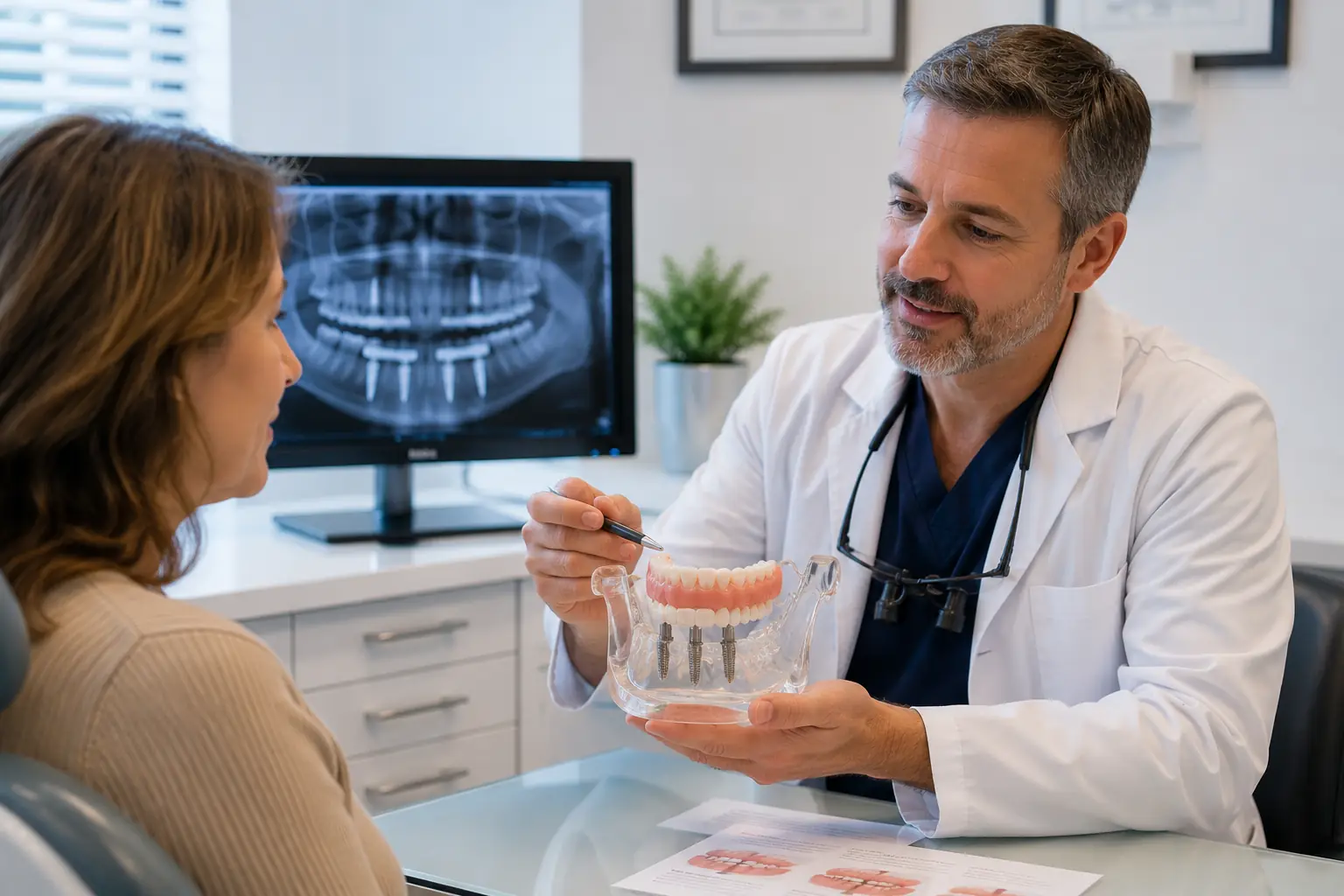
Traditional implant-supported dentures typically use six or more implants per arch, each placed vertically into the jawbone. All-on-4 uses only four implants per arch, with the two back implants angled to reach denser bone at the front of the jaw. That angled placement is the key difference: it lets the implants anchor a full arch of replacement teeth without needing as much bone volume as a traditional approach, and it’s why many patients who were previously turned away from implants due to bone loss are able to qualify for All-on-4 instead.
The result is a fixed, full-arch replacement that functions like natural teeth. Unlike a removable denture, All-on-4 restorations don’t rely on adhesive, don’t shift while eating or speaking, and don’t need to be taken out at night.
Who Qualifies for All-on-4
Candidacy comes down to a few factors your dentist evaluates during a consultation and CBCT scan, which provides a detailed 3D view of your jawbone:
* Enough remaining bone in the front of the jaw to anchor the angled implants, even if bone loss has ruled out traditional implants elsewhere in the arch* Overall gum health, since active gum disease typically needs to be treated before implant placement* General health that supports minor oral surgery, similar to the requirements for any implant procedure* Whether you’re missing most or all of the teeth in an arch, since All-on-4 is designed for full-arch replacement rather than single-tooth gaps
Patients who have been told in the past that they aren’t implant candidates due to insufficient bone are frequently good candidates for All-on-4 specifically because of how the implants are angled. That’s worth mentioning during a consultation even if a previous provider ruled out implants entirely.
What Happens During Treatment
All-on-4 is designed to be completed in a single visit for the surgical portion of treatment. During that appointment:
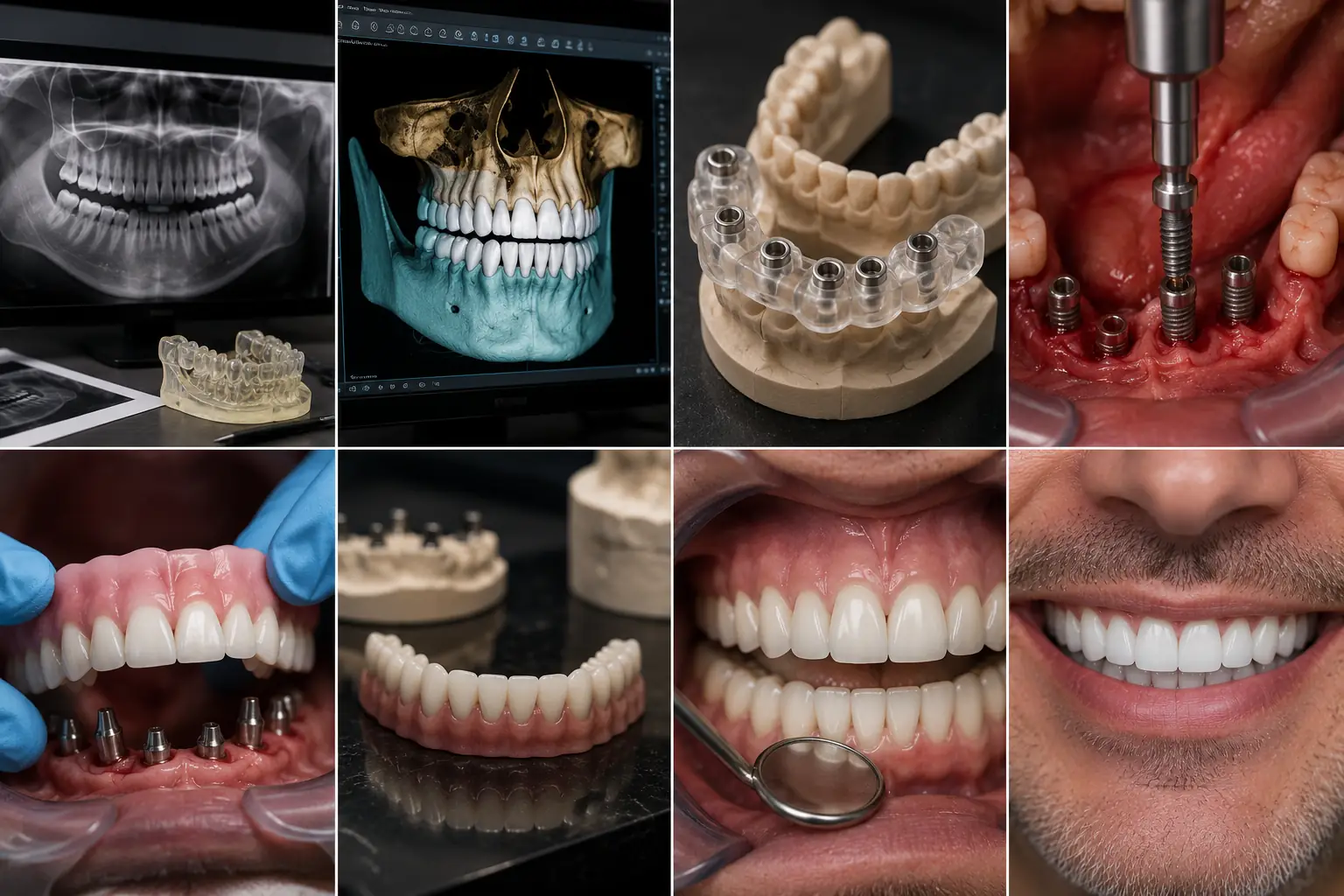
1. The four implants are placed using computer-guided planning based on your CBCT scan, which allows for precise angling and placement.2. A temporary set of replacement teeth is attached the same day, so you leave with a functional, fixed arch rather than a gap or a removable temporary.3. Over the following months, the implants fuse with the jawbone in a process called osseointegration.4. Once healing is complete, the temporary teeth are replaced with a final, custom-fitted permanent restoration.
Sedation options, including IV sedation, are available for patients who feel anxious about oral surgery, and the computer-guided approach is designed to make the procedure more predictable and comfortable than older implant techniques.
What All-on-4 Costs
All-on-4 typically ranges from $15,000 to $30,000 per arch in the Coachella Valley, depending on the materials used for the final restoration and each patient’s specific oral health needs. That range reflects the full arc of treatment, including the implants, the surgical placement, and the final prosthetic, not just a single component. Because pricing depends on individual factors like bone quality and whether any teeth need to be extracted first, a firm number requires an in-person consultation and CBCT scan.
All-on-4 vs. Traditional Dentures
Removable dentures are generally the lower-cost option upfront, but they come with ongoing trade-offs: daily adhesive, gradual bone loss under the denture over time, and limits on harder foods. All-on-4 addresses each of those points directly. Because the restoration is fixed rather than removable, there’s no adhesive to manage, and because the implants themselves stimulate the jawbone the way natural tooth roots do, they help preserve bone density rather than allowing it to shrink the way it does under a traditional denture.
All-on-4 vs. Mini Dental Implants and Full-Mouth Reconstruction
All-on-4 isn’t the only implant option for patients missing most or all of their teeth. Mini dental implants (https://desertdentalalternatives.com/blog/mini-dental-implants-vs-traditional-implants) use an even smaller implant post and can be a fit for patients with less bone density or a tighter budget, though they aren’t always suited to supporting a full fixed arch the way All-on-4 is. For patients dealing with a combination of missing teeth, damaged teeth, and gum issues across the whole mouth, full-mouth reconstruction (https://desertdentalalternatives.com/blog/full-mouth-reconstruction-process) may combine All-on-4 with other restorative work into one coordinated treatment plan. Sorting out which category fits your situation is exactly what a consultation is for.
Recovery and Long-Term Care
Because the temporary teeth are attached the same day, most patients are able to eat a soft-food diet within a day or two and gradually return to a normal diet as the surgical sites heal. Full integration of the implants with the jawbone takes several months, which is why the final permanent restoration isn’t placed until healing is complete. Once finished, All-on-4 restorations are cared for much like natural teeth: regular brushing, flossing under the restoration with the tools your dentist recommends, and routine dental visits to monitor the implants and surrounding gum tissue.
Getting Started
The only way to know whether All-on-4 is the right fit is a CBCT scan and an in-person evaluation, since bone volume and gum health vary significantly from patient to patient. Schedule a consultation (https://desertdentalalternatives.com/contact-us/) at Desert Dental Alternatives in Cathedral City to find out whether you qualify.
Signs You Might Be a Good Candidate
A few common situations tend to bring patients in specifically asking about All-on-4:
* You’re missing most or all of the teeth in an upper or lower arch, or facing the likelihood of losing them soon due to decay or gum disease* You currently wear a removable denture and are tired of managing adhesive, slipping, or difficulty eating certain foods* A previous provider told you that you didn’t have enough bone for implants, particularly without an extensive bone graft* You want a fixed, non-removable solution rather than something you take out at night* You’re looking for a full-arch solution with a faster overall timeline than staged traditional implant treatment
If more than one of these sounds familiar, it’s worth bringing up All-on-4 specifically during your consultation rather than assuming a removable denture is your only option.
Questions Worth Asking at Your Consultation
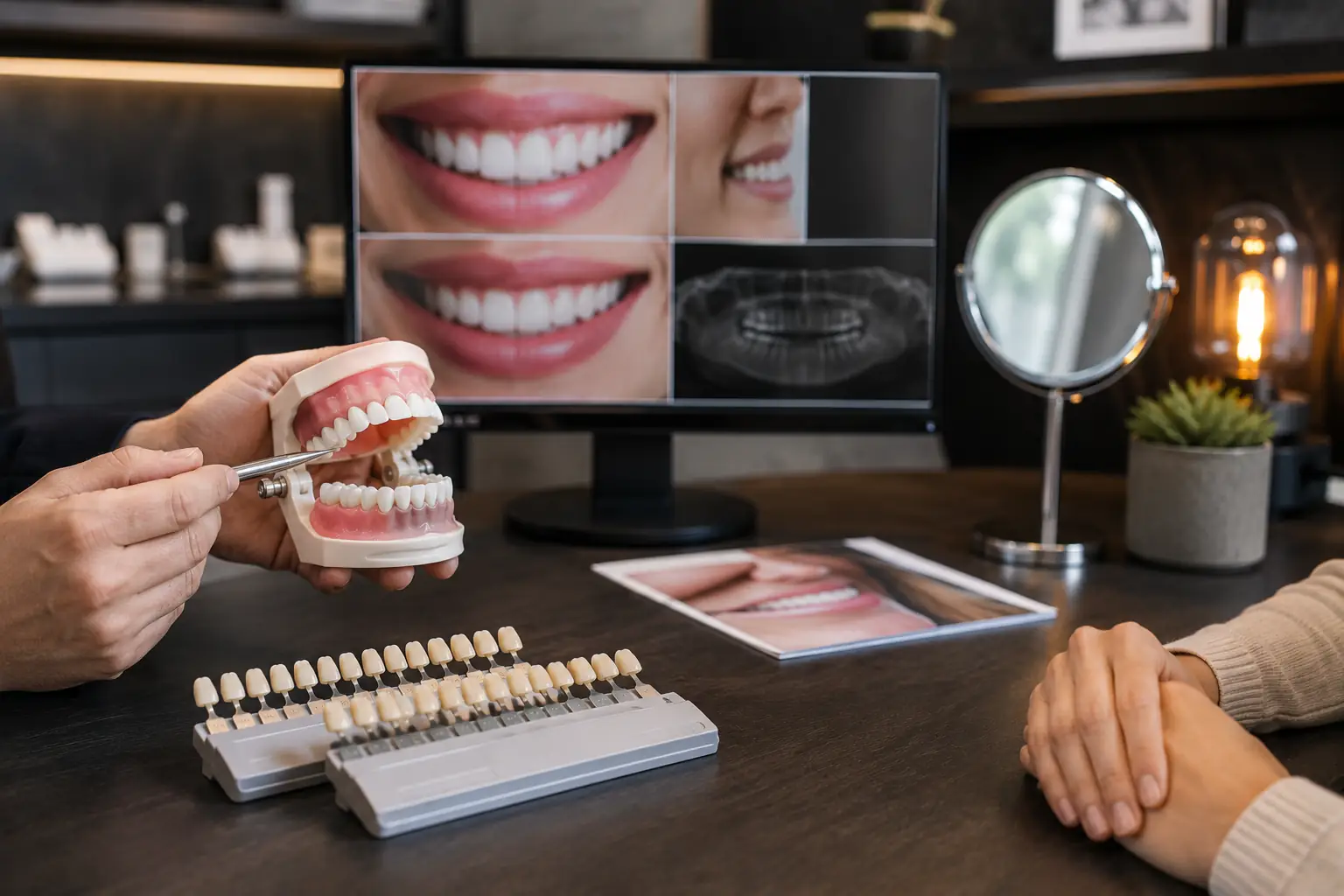
Because All-on-4 involves a meaningful upfront investment, a good consultation should leave you with clear answers to a few key questions: whether your CBCT scan shows enough bone for angled placement without grafting, what materials are being used for your final restoration and how that affects the cost range, what your temporary teeth will look and feel like on day one, and what the maintenance schedule looks like once your permanent restoration is placed. A dentist who welcomes these questions, rather than rushing past them, is giving you the full picture rather than a sales pitch.
Financing and Care Coordination
Because All-on-4 represents a significant investment, it’s worth discussing payment options (https://desertdentalalternatives.com/payment-options/) during your consultation, including financing plans that let you spread the cost over time. Desert Dental Alternatives serves patients throughout Cathedral City and the greater Coachella Valley, including Palm Springs, Rancho Mirage, and Palm Desert, so scheduling a consultation is straightforward regardless of which nearby community you’re coming from.
Is All-on-4 painful?
The surgical placement is performed under local anesthesia, with sedation options available for patients who prefer it. Most patients report manageable discomfort afterward, similar to other oral surgery, that’s controlled with over-the-counter or prescribed medication for the first few days.
How long do All-on-4 implants last?
With proper care and regular dental visits, the implants themselves can last decades, and many patients keep them for life. The prosthetic teeth attached to the implants may need replacement or adjustment after ten to fifteen years of normal wear.
Do I need a bone graft for All-on-4?
Often not. The angled placement of the back implants is specifically designed to use existing bone in the front of the jaw, which is why many patients who need bone grafting for traditional implants can avoid it with All-on-4. A CBCT scan determines whether grafting is necessary in your specific case.
Can I eat normally after getting All-on-4?
You’ll start with softer foods while the temporary restoration settles in and the surgical sites heal, then gradually reintroduce firmer foods. Once the final restoration is placed and healing is complete, most patients can eat the foods they enjoyed before losing their teeth.
How is All-on-4 different from a traditional implant-supported denture?
Traditional implant dentures typically use six or more implants placed vertically, which often requires more bone volume and can involve additional grafting. All-on-4 uses four angled implants designed to work with less available bone, and is completed with a fixed temporary restoration on the same day as surgery.