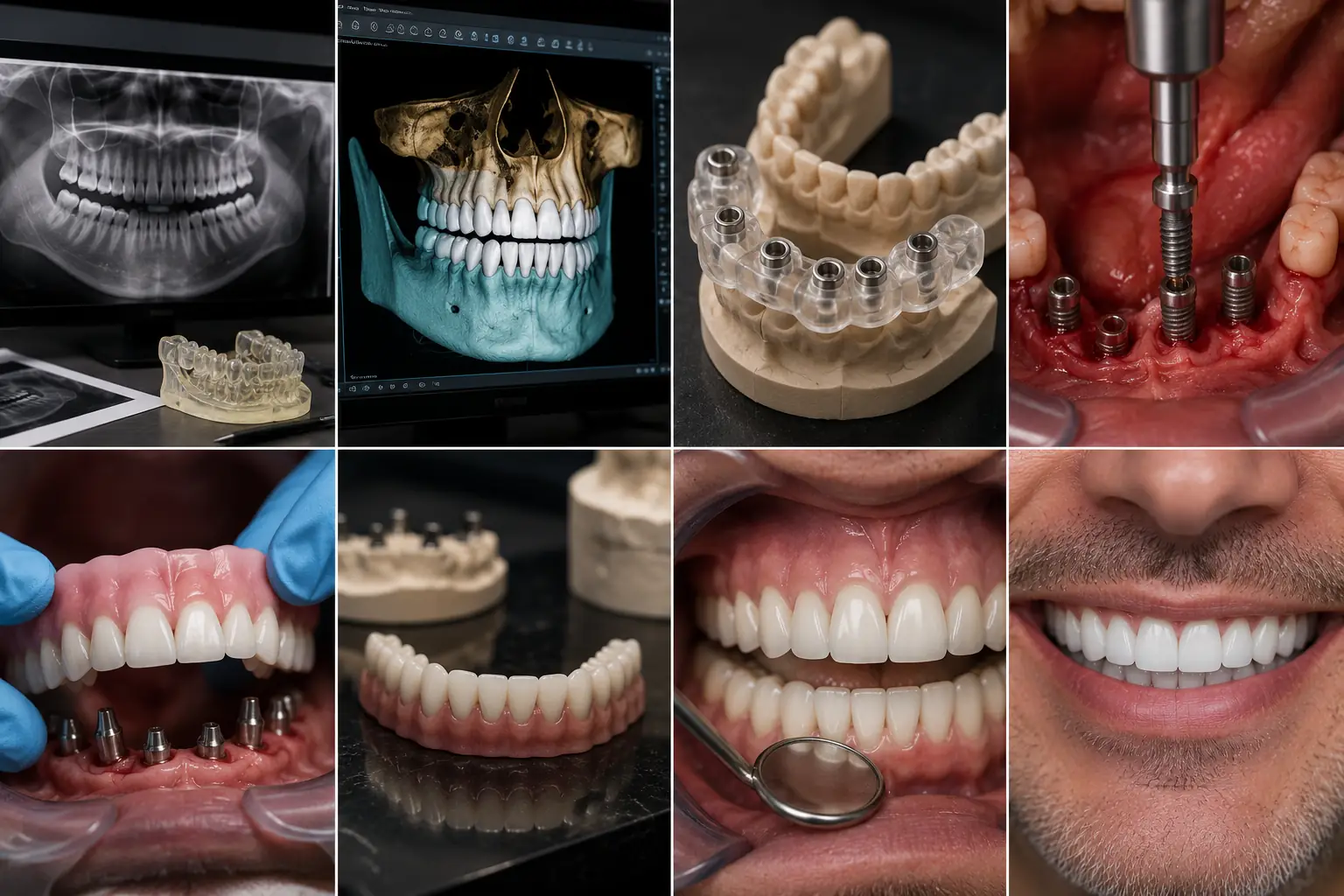
Full-mouth reconstruction is a customized treatment plan that combines multiple procedures, such as implants, crowns, bridges, and restorative work, to repair extensive tooth damage or loss across the mouth. The process starts with a full exam and 3D imaging to identify every issue, then builds a coordinated plan around your specific needs, timeline, and budget. Treatment length varies from a few weeks to several months depending on what’s involved.
What Full-Mouth Reconstruction Actually Means
Full-mouth reconstruction isn’t a single procedure. It’s a coordinated treatment plan built for patients dealing with widespread issues, extensive decay, multiple missing teeth, worn-down teeth, or a combination of problems that a single treatment can’t fully address. Rather than treating each issue as a separate, disconnected appointment, a full-mouth reconstruction plan sequences everything together, so the end result functions and looks like a complete, healthy mouth.
This is different from a smile makeover, which focuses primarily on cosmetic appearance. Full-mouth reconstruction is built around restoring function, health, and structure first, though the results are often cosmetically significant as well.
Procedures That May Be Part of the Plan
Because every patient’s situation is different, a full-mouth reconstruction plan is built from whichever combination of the following best addresses your specific needs:
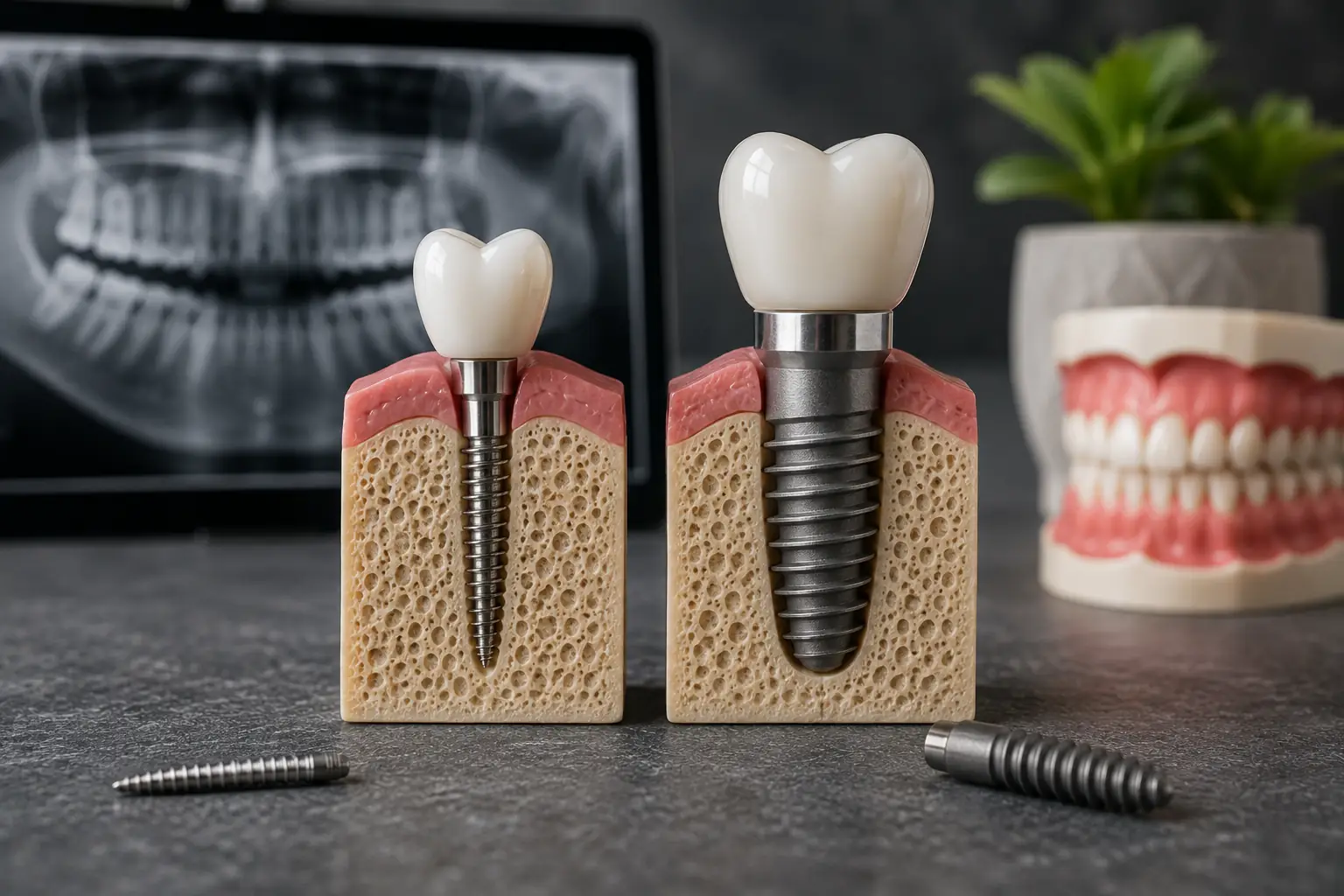
* Implant crowns for single missing teeth, which preserve the health of neighboring teeth and the surrounding bone* Implant bridges for multiple adjacent missing teeth, anchored to implants rather than requiring healthy teeth to be altered* Implant dentures, removable or fixed, for patients missing most or all of the teeth in an arch* All-on-4 implants (https://desertdentalalternatives.com/blog/all-on-4-dental-implants-cathedral-city) for a fixed, full-arch replacement using four implants per arch* Mini dental implants (https://desertdentalalternatives.com/blog/mini-dental-implants-vs-traditional-implants) for patients with limited bone density who still need a stable, implant-supported solution* Restorative procedures, including fillings, crowns, and root canals, for natural teeth that can be preserved rather than replaced
Your dentist determines which combination applies to you based on which teeth can be saved, which need to be replaced, and what your bone and gum health can support.
How the Process Starts
Every full-mouth reconstruction plan begins with a comprehensive exam, including digital X-rays and 3D scans, to get a complete picture of what’s happening beneath the surface: bone density, the condition of remaining teeth, gum health, and bite alignment. That imaging is what allows your dentist to build an accurate, sequenced plan rather than addressing problems one at a time as they come up.
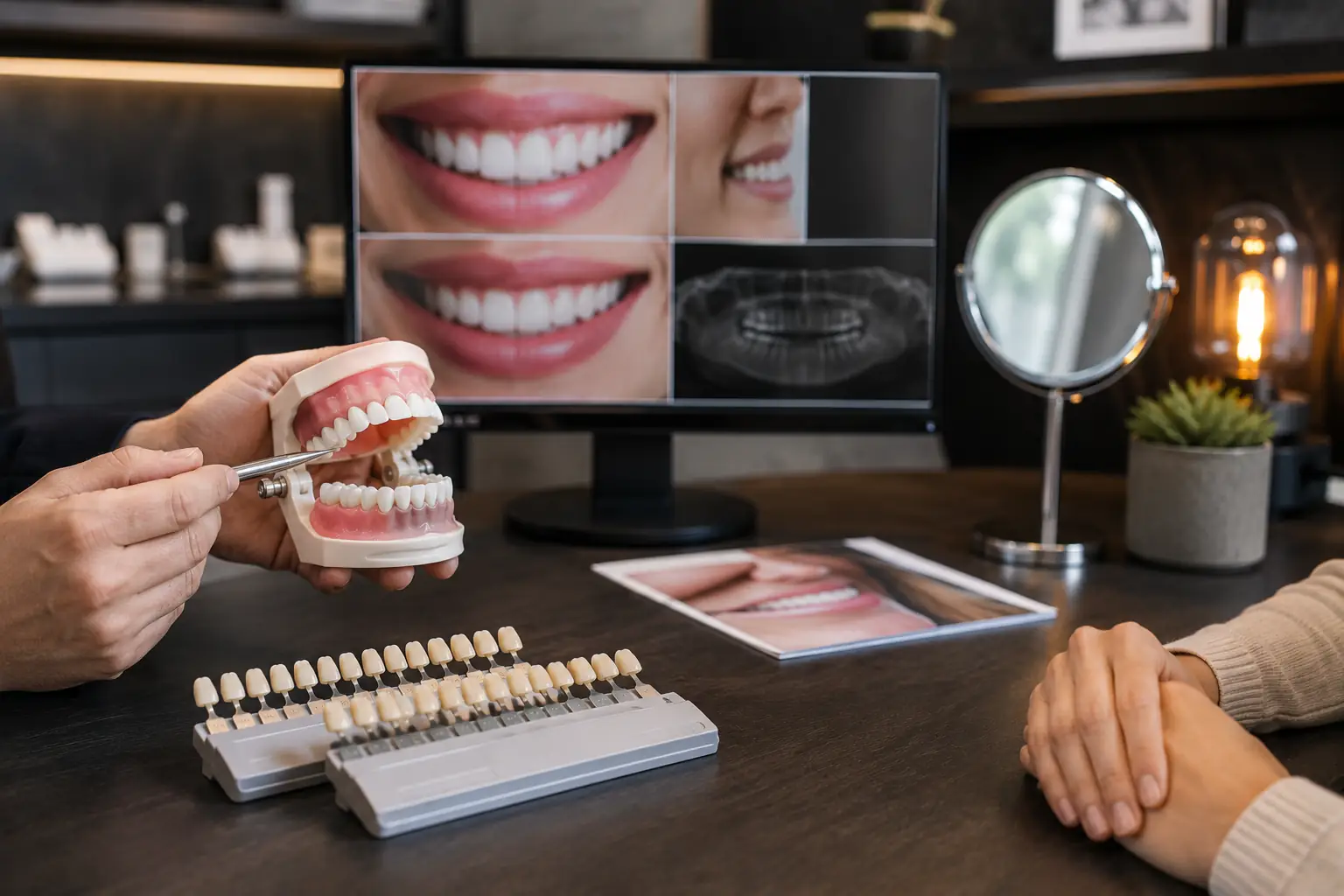
From there, your dentist walks through which procedures apply to your situation, in what order, and why, along with a realistic timeline and cost estimate based on your specific plan.
How Long Full-Mouth Reconstruction Takes
Timeline depends heavily on what’s included in your plan. A reconstruction built primarily around conventional dentures can sometimes be completed in a matter of weeks. A plan that includes implants generally takes several months from start to finish, since implants need time to integrate with the jawbone before a final restoration can be placed. If extractions, bone grafting, or gum treatment are needed before implants can be placed, that adds additional healing time to the front end of the process.
Because of this variability, one of the most useful parts of a consultation is getting a realistic, personalized timeline rather than a general estimate, since a plan combining several procedures is sequenced differently than a single-procedure treatment.
What Determines Your Specific Plan
A few factors shape what your full-mouth reconstruction actually includes:
* How many teeth are missing versus how many can be restored and preserved* Your current bone density in the areas where implants are being considered* Whether active gum disease needs to be treated before other work begins* Your budget and how that affects sequencing and material choices* Your personal goals, since some patients prioritize the fastest path to a functional bite while others prioritize the most durable long-term solution
Because these factors interact, two patients with a similar starting point can end up with meaningfully different treatment plans.
Full-Mouth Reconstruction vs. a Single Procedure
If you’re only missing one or two teeth, or only one part of your mouth needs attention, a single procedure like an implant crown or an implant bridge may be all you need rather than a full reconstruction plan. Full-mouth reconstruction becomes the more appropriate path when problems span multiple areas of the mouth, when several teeth need replacement, or when function and appearance both need to be rebuilt together. A consultation and imaging are what determine which category your situation actually falls into.
Getting an Accurate Plan for Your Mouth
Because full-mouth reconstruction is built around your specific combination of issues, an accurate plan and cost estimate require a complete exam with digital X-rays and 3D imaging. Schedule a consultation (https://desertdentalalternatives.com/contact-us/) at Desert Dental Alternatives in Cathedral City to find out what a reconstruction plan would look like for your mouth.
How Sequencing Works With Multiple Procedures
One of the more complex parts of full-mouth reconstruction is deciding what happens in what order. Active gum disease is typically treated first, since implants and restorative work need healthy gum tissue to succeed. Extractions and any necessary bone grafting come next, followed by a healing period before implants are placed. Once implants are in and integrating with the jawbone, restorative work on remaining natural teeth can often happen in parallel, and final restorations, crowns, bridges, or a denture, are placed last, once everything underneath has healed and stabilized. Your dentist maps this sequence out during your consultation so you know what to expect at each stage rather than being surprised by how long certain steps take.
Planning for the Investment
Because full-mouth reconstruction plans vary so widely in scope, cost varies just as widely, from a few thousand dollars for a denture-based plan to significantly more for an implant-heavy reconstruction. Financing options (https://desertdentalalternatives.com/payment-options/) are available to help make a larger reconstruction plan more manageable, and your dentist can walk through how staging treatment over time affects both your budget and your timeline.
Who This Serves Across the Valley
Desert Dental Alternatives provides full-mouth reconstruction planning for patients throughout Cathedral City and nearby communities, including Desert Hot Springs, Thousand Palms, and Indian Wells, using the same comprehensive imaging and planning process for every patient regardless of how extensive their needs are. Schedule a consultation (https://desertdentalalternatives.com/contact-us/) to find out what a reconstruction plan built for your mouth would actually involve.
How much does full-mouth reconstruction cost?
Cost depends entirely on which procedures your specific plan includes, since a plan built around conventional dentures costs significantly less than one built around implants. An accurate estimate requires a full exam and imaging.
Is full-mouth reconstruction the same as a smile makeover?
No. A smile makeover is primarily focused on cosmetic appearance, while full-mouth reconstruction is focused on restoring function, health, and structure for patients with extensive damage or tooth loss, though the cosmetic results are often significant as well.
How long does treatment take from start to finish?
Timeline varies based on what’s included. Plans built around conventional dentures can take a few weeks, while implant-based plans typically take several months due to the healing and integration time implants require.
Will I need teeth extracted as part of full-mouth reconstruction?
Some patients do, particularly if certain teeth are too damaged or decayed to be saved. Your dentist will identify which teeth can be preserved and which need to be replaced during your initial exam and imaging.
Can full-mouth reconstruction include both implants and my natural teeth?
Yes. Many reconstruction plans combine implants to replace missing teeth with restorative work, like crowns or root canals, on natural teeth that can be preserved, rather than replacing every tooth in the mouth.