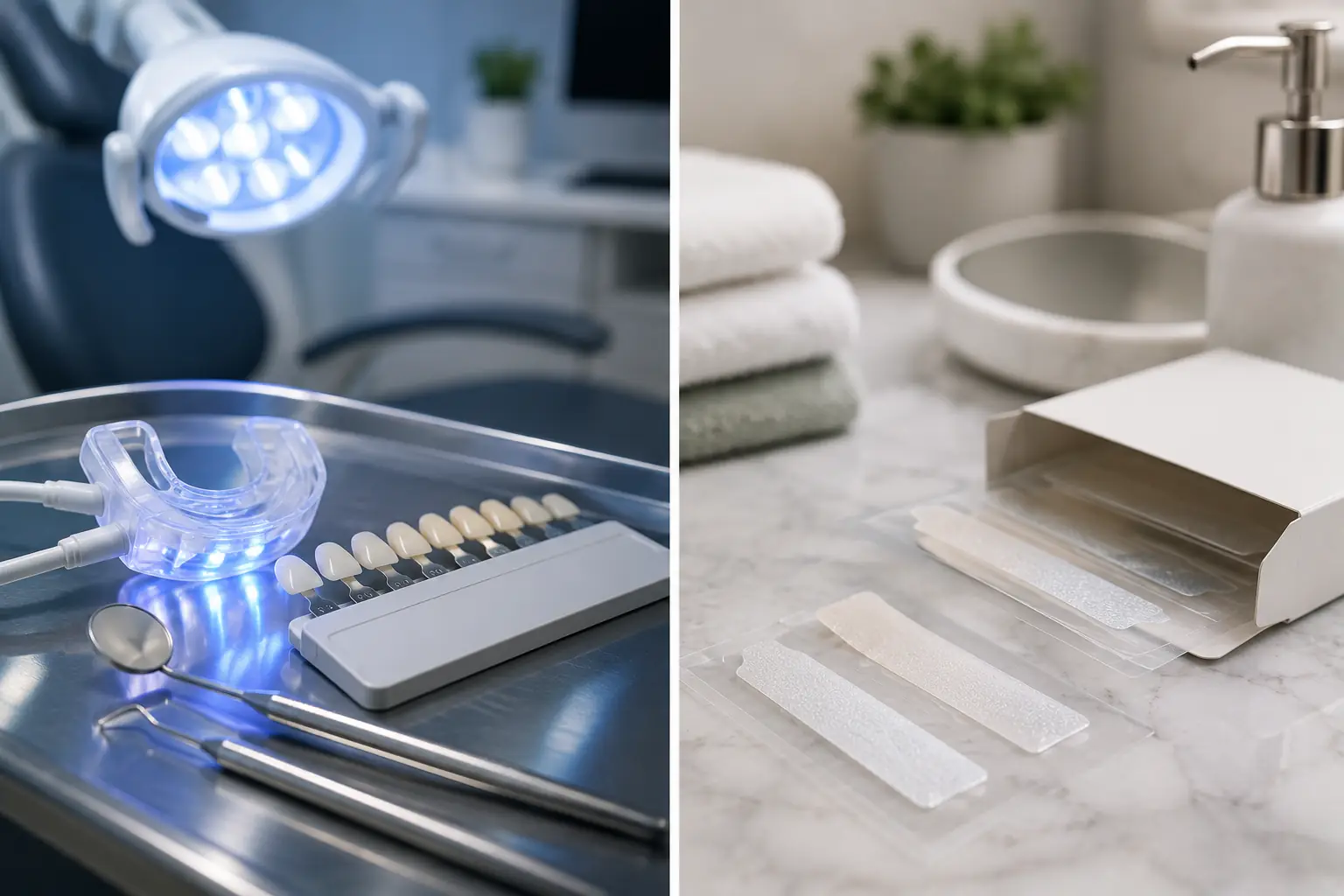
Professional teeth whitening trays use a custom-fitted mold and a stronger whitening gel than anything sold over the counter, producing more even, longer-lasting results than drugstore strips. A custom take-home kit typically costs $300 to $600, compared to $20 to $50 for strips, but delivers more consistent coverage and is monitored by a dentist. The right option depends on how significant your staining is and how long you want results to last.
The Core Difference: Fit and Strength
Drugstore whitening strips are made in a handful of generic sizes designed to fit an average mouth, which means they rarely make full contact with every tooth, especially in a mouth with any natural variation in tooth size or alignment. Professional take-home trays, by contrast, are custom-molded to your exact teeth, so the whitening gel sits evenly against every surface rather than missing gaps between teeth or along the gumline.
The gel itself is also meaningfully different. Professional-grade whitening gel used in custom trays is significantly more potent than what’s legally available in over-the-counter products, which is why professional treatment tends to produce a more noticeable and even result in a shorter overall treatment period.
Comparing Results
Because a custom tray holds gel evenly against the entire visible surface of each tooth, results tend to be more uniform, without the streaky or inconsistent whitening that can happen when a one-size-fits-all strip doesn’t fully contact certain teeth. Store-bought strips can still lighten teeth, but results are often less predictable and may require significantly more applications to reach a similar shade.
Comparing Cost
Drugstore strips are the cheaper option upfront, typically ranging from $20 to $50 per box. Professional take-home kits range from $300 to $600, which reflects the cost of a custom-fitted tray and professional-strength gel rather than a generic product. For patients focused purely on minimum cost for a subtle improvement, strips may be enough. For patients who want a more significant, even, and longer-lasting result, the professional option is designed to deliver more for the additional cost.
How Long Results Last
Whitening results aren’t permanent with either option, but professional treatment tends to hold up longer. A professional whitening treatment can keep teeth noticeably brighter for a few months to a year or more, depending on the treatment used, your natural tooth shade, and habits like coffee, tea, red wine, or tobacco use that contribute to new staining over time. Drugstore strips typically fade faster and may need more frequent reapplication to maintain results.
What Actually Gets Whitened
Both professional whitening and drugstore strips are effective for extrinsic stains, surface-level discoloration caused by food, drinks, and tobacco, sitting on the enamel. Neither option is designed to address intrinsic staining, discoloration that originates inside the tooth from factors like certain medications, trauma, or a tooth that’s had root canal treatment. If your teeth aren’t responding to whitening the way you’d expect, intrinsic staining is often the reason, and it typically requires a different cosmetic approach, like veneers or bonding, rather than more whitening treatment.
Safety Considerations
Both options use variations of the same active whitening ingredient, but professional treatment includes a dentist’s evaluation beforehand to check for cavities, exposed roots, or gum recession that could make whitening uncomfortable or inappropriate until treated first. Over-the-counter strips don’t include that evaluation step, which means a patient could unknowingly use whitening products on teeth or gums that aren’t ready for it. A dentist can also fit trays to avoid gel contact with the gumline, reducing the irritation that sometimes comes with generic one-size-fits-all strips.
When Whitening Isn’t Enough
If your main concern isn’t just shade but also chips, gaps, or uneven tooth shape, whitening alone won’t address those issues. In that case, whitening is often paired with other cosmetic treatment as part of a broader smile makeover (https://desertdentalalternatives.com/blog/smile-makeover-consultation-what-to-expect), or used alongside procedures like veneers (https://desertdentalalternatives.com/cosmetic-dentistry/dental-veneers/) or tooth bonding (https://desertdentalalternatives.com/cosmetic-dentistry/tooth-bonding/) to address shape and structure at the same time as color.
Making the Right Choice for You
If you’re dealing with mild surface staining and want a low-cost option to try first, drugstore strips can be a reasonable starting point. If you want a more even, longer-lasting result, want your teeth evaluated before whitening to rule out issues that could affect results, or simply want the strongest whitening option available without an in-office procedure, a custom professional take-home kit is the better fit.
Getting Started
A quick consultation is the easiest way to find out whether your staining will respond well to whitening, and whether a custom take-home kit is the right option for your goals. Schedule a whitening consultation (https://desertdentalalternatives.com/contact-us/) at Desert Dental Alternatives in Cathedral City to get started.
Who Should Be Cautious With Whitening
Whitening isn’t the right starting point for everyone. Patients with untreated cavities, significant gum recession, or existing dental work like crowns or fillings on front teeth should be evaluated first, since whitening gel doesn’t change the color of existing restorations and cavities should be addressed before any cosmetic treatment. Pregnant or nursing patients are also generally advised to wait on elective whitening. A quick exam rules out these factors before your custom trays are made, which is part of why professional whitening starts with a dentist’s evaluation rather than skipping straight to treatment.
Keeping Your Results Longer
Whitening results last longest when paired with basic habits: rinsing with water after coffee, tea, or red wine, avoiding tobacco, and keeping up with regular dental cleanings (https://desertdentalalternatives.com/general-dentistry/dental-cleanings-exams/) to remove surface buildup before it has a chance to set in. Many patients also keep their custom trays for periodic touch-up treatments, since the trays themselves don’t wear out and can be reused with new whitening gel as needed.
What to Expect the First Time You Whiten
If you’ve never tried professional whitening before, the process is more straightforward than many patients expect. After your evaluation confirms you’re a good candidate, impressions are taken to create your custom trays, which are typically ready within a week or two. Your dentist walks you through exactly how long to wear the trays and how often, since overuse doesn’t speed up results and can increase temporary tooth sensitivity. Mild sensitivity to hot or cold during the first few days of treatment is common and usually resolves quickly once the treatment period ends.
Whitening as Part of Routine Dental Care
Whitening tends to work best as an addition to good baseline dental health rather than a substitute for it. Patients who keep up with regular cleanings and exams typically see better, more even whitening results, since a professional cleaning removes surface buildup that can interfere with how evenly the whitening gel contacts each tooth. If it’s been a while since your last visit, scheduling a cleaning before starting a whitening treatment is a reasonable first step.
Is professional teeth whitening safe?
Yes, when supervised by a dentist. Your teeth and gums are evaluated beforehand to rule out issues like cavities or gum recession that could make whitening uncomfortable, and the custom tray is designed to limit gel contact with the gumline.
How much whiter will my teeth actually get?
Results vary based on your natural tooth shade and the cause of staining, but most patients see several shades of improvement with a professional take-home kit, more than is typical with drugstore strips.
Why don’t drugstore strips work as well as professional trays?
Strips are made in generic sizes that don’t fully match the shape of every mouth, so they often miss full contact with some teeth. Professional trays are custom-molded to your teeth, allowing the stronger professional-grade gel to reach every surface evenly.
Can whitening fix yellow teeth from medication or a root canal?
Not typically. That kind of intrinsic staining originates inside the tooth and usually doesn’t respond well to whitening. Veneers or bonding are generally better options for addressing that type of discoloration.
How often can I redo a professional whitening treatment?
This depends on your original shade goals and how quickly new staining develops from your diet and habits. Your dentist can recommend a reasonable touch-up schedule based on your results and lifestyle.